
"Guatemala coffee profile"
300 article(s) found

The sweet rose summer coffee beans growing geographical location climate altitude profile
The seeds of coffee were taken from Geisha Mountain in southwest Ethiopia in 1931, transplanted to Kenya in 193132, transferred to Tanzania in 1936, and introduced to Costa Rica in 1953. As for when they were introduced to Jaramillo Estate in Panama, it is unknown. Only Hacienda La Esmeralda in Panama is known.

[Polsa Manor, Guatemala, washed Pacamara] Special report on Cheetah Project Micro-batch shooting
Professional coffee knowledge exchange more coffee bean information please follow Coffee Workshop (Wechat cafe_style) Huehuetenan go Guatemala Finca La Bolsa Polsa Manor in Guatemala: Vivette Nango Manor: Polsa Manor elevation: 1500 meters above sea level: Pacamara treatment: washing 01 | production area profile Guatemala faces Mexico in the north and Mexico in the south.

World boutique coffee El Salvador manor introduction: El Salvador coffee Cafe de El Salvado
Country profile Republic of El Salvador, Repblica de El Salvador in Spanish, the Republic of El Salvador in English. It is located in Central America, bordering Guatemala and Honduras in the north, and the Pacific coastline in the west and south. The smallest country in Central America and the most densely populated country in Central America. The land area is 21393 square meters

Cacicero Coffee Guatemala Cicero Coffee Guatemala Cicero Coffee Story
Professional coffee knowledge exchange more coffee bean information please follow the coffee workshop (Wechat official account cafe_style) Starbucks Casi Cielo Coffee from Guatemala. Casi Cielo (Spanish), translated into almost heaven, means a noble flavor. Starbucks' description of elegant floral scents and satisfying cocoa flavors seems to fit that description. Starbucks Zeng Yi

San Marco has the hottest climate among the eight major coffee producing areas in Guatemala.
Volcano San Marco Volcanic San Marcos: volcano San Marco Volcanic San Marcos: San Marco has the hottest climate of the eight largest coffee producing areas in Guatemala, with a maximum rainfall of 200inches (5000 mm). The rainy season is earlier than in other areas, and coffee trees bloom earlier. Like other remote areas of Guatemala, the volcano San Marco coffee is grown by small farmers.

SL28 coffee beans from New Oriental region in Guatemala
Pay close attention to the coffee review (Weixin Official Accounts vdailycom ) and find that each region has its own climate change, so the coffee beans in each producing area have their own characteristics. However, in summary, the coffee in Guatemala presents a mild and mellow overall texture, with elegant aroma and pleasant acidity with similar calorific value such as fruit acid, which seems to be

Brief introduction of Pacamara Coffee Bean in Guatemala
Follow the caf é (Wechat official account vdailycom) found that the beautiful cafe opened its own shop, Guatemalan coffee beans, grown in Guatemala, this bean is a bourbon coffee bean, is one of the more sour varieties. It has a strong sour taste, mellow taste and slightly wild taste, and can be used as a single drink or for the preparation of comprehensive coffee. Guatemala is located in Guatemala, west of Central America.
One of the five major volcanic coffee producing areas in Guatemala.
3. Traditional Traditional Atitl n (Traditional Atitl n) is one of the five largest volcanic coffee producing areas in Guatemala, and its soil organic matter is the most abundant among the five major volcanic coffee producing areas. 90% of the traditional Atilan coffee is grown on the violent volcanic slopes of Lake Attila, where the daily breeze stirs the lake.
Coffee beans grown by small farmers in New Oriental, Guatemala
New Oriental (New Oriente): coffee in this area has been grown entirely by small farmers since the 1950s, and now every farmer in the mountains is a coffee production unit. This area, once the most remote and poorest part of Guatemala, is now alive and well. Rainy and cloudy, the ancient era of the New Oriental was a volcanic area, and the soil volcanic metamorphic rocks evolved.

What are the characteristics of Guatemalan beans? brief introduction of Guatemala Oliente coffee beans
Professional coffee knowledge exchange more coffee bean information please follow the coffee workshop (Wechat official account cafe_style) Front Street Guatemala Olient Coffee introduction Guatemala Coffee Association established the Guatemalan coffee brand, defining coffee from eight different places of origin. Eight regions are divided into Antigua, Vivette, Koban rainforest, Attland,

Does the coffee taste good in Guatemala San Felisa Manor? introduction to Guatemala Santa Frissa Manor
For more information about coffee beans, please follow the Coffee Workshop (official Wechat account cafe_style) Origin: Guatemala: Acatenango Valley height: 1520-1900 meters process: wash the beans of this month from the Acatenango Valley of Guatemala in October 2015. the taste is mellow, emitting a pleasant sweet smell, forming a unique taste. Santa Fe

Silky and meticulous Tianci Manor Fine Coffee Bean Planting Location Climate Elevation Profile
In many countries coffee production is severely affected for political reasons. The coffee industry in Nicaragua is no exception. The revolution of 1979 forced coffee growers to flee to Miami. A period of uncertainty ensued as the government considered whether to reallocate land (including many plantations), resulting in coffee shortages and declining yields from the early 1970s.

Aromatic and rich Mexican fine coffee beans Growing conditions Geographical location Climate Altitude profile
Mexicans are optimistic and enthusiastic by nature. It can also be seen from their coffee. The mellow Mexican coffee is not only loved by the native people, but also praised by many coffee connoisseurs. There are many ways to taste Mexican coffee, mainly divided into alcoholic and non-alcoholic practices. Coffee growing areas in Mexico are mainly concentrated in the southeastern highlands, relying on
Among the three major non-volcanic coffee producing areas in Guatemala, the tiny Tenango Highland has the driest climate and the sea.
Highland Huehue: of the three major non-volcanic coffee producing areas in Guatemala, the Ginango Heights has the driest climate and the highest elevation. The dry and hot wind from Mexico's Tehuantepec plateau protects the area's coffee from frost, and coffee can be grown to 2000 meters (6500 feet). Because of its remote location, all coffee

The acidity of Guatemala Ekatran fruit valley is obviously dry, wet and fragrant American coffee.
Acatenango Valley: the Acatenango Valley is 2000 meters (6500 feet) above sea level, with dense shade and unique ecology. Nearby Fuego volcanoes continue to erupt, making its coarse, sandy soil rich in a variety of minerals. The temperate sea breeze from the Pacific and the seasonal climate make this producing area
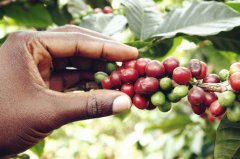
Atitlan is one of Guatemala's top five volcanic coffee-producing regions
Specialty coffee is also known as specialty coffee. It refers to coffee made from green beans with excellent taste characteristics grown in a few extremely ideal geographical environments. Depending on the particular soil and climatic conditions in which they are grown, they have outstanding flavors. This type of coffee is carefully selected and graded for its hard texture, rich taste and wind.

Guatemala beans characteristics brief introduction Guatemala Antigua coffee characteristics spicy and gentle
Professional coffee knowledge exchange More coffee bean information Please pay attention to coffee workshop (Weixin Official Accounts cafe_style) Front Street-Guatemala Antigua coffee introduction Most of the coffee produced in Guatemala is Arabica. The treatment process is washing. Planted at heights ranging from 2,300 to 5,600 feet. Harvesting methods are almost entirely manual. Harvesting is possible throughout the year, but the main harvest periods

Taste characteristics of Guatemala coffee, introduction of Guatemala coffee
Pay attention to coffee reviews (Weixin Official Accounts vdailycom ) and find that the beautiful cafe opens its own shop. The Guatemala area is very suitable for growing coffee. The annual precipitation is also very sufficient. The alpine area above 1400 meters above sea level and the climate of Guatemala with humidity ratio maintained at 60~70% create a natural environment for cultivating high-quality coffee. The highest coffee in Guatemala
Rainforest Coffee Coffee is grown in the obviously undulating, foggy mountainous areas of Guatemala.
Rainforest Cobn rainforest Rainforest Cobn is cloudy, rainy and cool all the year round. The vast majority of Koban coffee in the rainforest is grown in the obviously undulating and foggy mountains of the region and is deeply influenced by limestone and clay in the Atlantic basin. Koban has two seasons: the rainy season and the rainy season. Rainforest Koban Cup measuring characteristics (Rainforest Cobn)